


Leading the audience to explore: the exquisite design of museum showcases and visitor flow lines
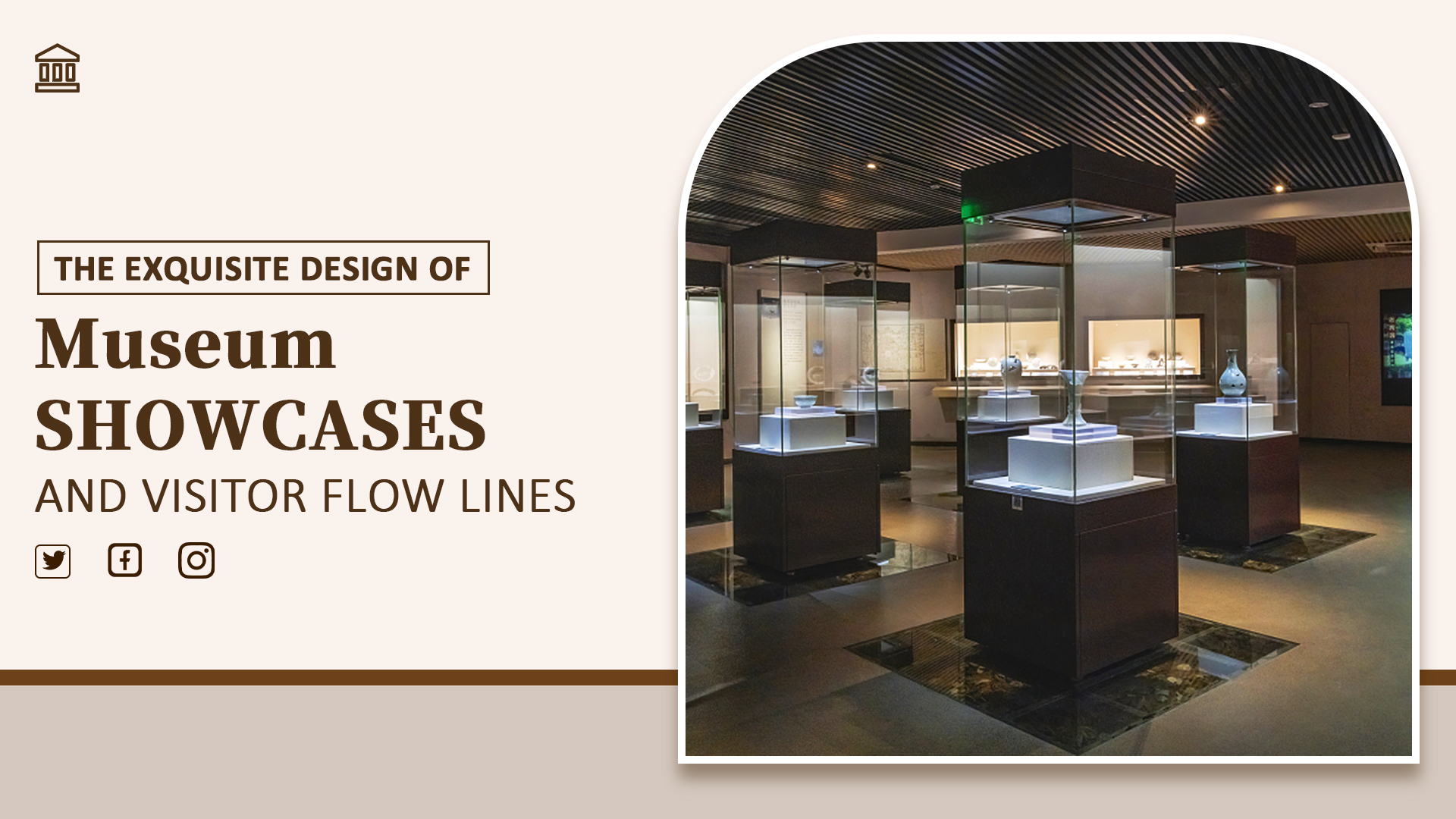
As a carrier of culture and history, museums carry precious cultural relics and artworks, and their display methods directly affect the audience's visiting experience. In museum exhibition design, the placement of showcases and the planning of visitor flow are given crucial tasks, aiming to create an engaging and unforgettable visit for the audience.
1. Creative layout: guide the line of sight and release information
The layout of museum showcases is not just a display of objects, but a dialogue. Through appropriate layout, the visual connection between exhibits is strengthened and guides the flow of the audience's sight. For example, in a historical exhibition, the exhibits can be connected in series through a linear layout to allow the audience to feel the flow of time. In thematic exhibitions, a partition layout can be used to organize related exhibits together to form a short story, so that the audience can get more information during appreciation.
2. Optimization of visit flow lines: smoothness and in-depth experience
The design of the visitor flow is one of the important factors affecting the visitor experience. Reasonable circulation can ensure that visitors follow the prescribed path to browse the exhibition, and can also create a sense of exploration for them. The optimization of streamlines involves the location of showcases, viewing order and the setting of rest areas. By setting up rest areas in appropriate places, viewers can rest comfortably while appreciating cultural relics, while also better absorbing the exhibition content.
3. The key to guidance signs: preventing the audience from getting lost
Guidance signs play an important role in the flow of visits. They can help visitors accurately find the exhibition areas they are interested in and no longer get lost in the exhibition hall. Clear maps, signs and signs can effectively provide visitors with guidance and help them better plan their visit routes, thus optimizing the entire visit process.
4. Diverse interactions: demonstrate educational value and enhance interactivity
Museum exhibitions are not only the presentation of information, but also carry the mission of education. The design of showcases and visitor flow lines should also be consistent with this. By setting up interactive display areas, multimedia guidance, touch screens, etc., audiences can have a deeper understanding of the stories behind the exhibits and participate in the educational process of the exhibition.
In the design of museum showcases and visitor flow lines, creativity, planning and keen awareness of audience experience are indispensable elements. Through careful layout, optimized circulation and various interactive methods, the museum can lead the audience into the world of history and culture, creating a journey full of discovery and perception for them. In the future, with the development of technology and innovation in design, we can look forward to more exciting practices in museum showcases and visitor flow lines.
Quick links
Project
Product
China Marketing Center (Showroom):
9th Floor (Full Floor), Zhihui International Building, Taiping Town, Conghua District, Guangzhou
China Manufacturing Center:
Dinggui Industrial Park, Taiping Town, Conghua District, Guangzhou