


The art and protection of lighting in museum display showcase
In order to ensure the effective use of lighting in display showcase, museum lighting design needs to take into account the characteristics of the exhibits, the theme of the exhibition and the visitor experience. Here are a few noteworthy suggestions:
Firstly, the installation and commissioning of lights should be precise and meticulous. The position and angle of the lamps and lanterns need to be carefully planned to ensure that the light can be accurately projected on the exhibits, highlighting the details and characteristics of the exhibits. When commissioning the lighting, the consistency and stability of the colour temperature of the light should be ensured to avoid the impact of colour temperature drift on the exhibits.
Secondly, for exhibits of different materials and colours, choose appropriate light colour rendering. For colour exhibits, high colour rendering lights should be selected to ensure the authenticity of colour reproduction. For rare exhibits, such as ancient textiles or paintings, it is also necessary to use high colour rendering lights to highlight their precious value and unique charm.
In addition, the protection of exhibits should be considered when lighting the display showcase. Exhibits in museums usually have certain requirements on light, temperature and humidity. Therefore, when carrying out lighting design, care should be taken to avoid ultraviolet and infrared radiation, as well as over-raising the temperature of the display showcase, so as to reduce the damage to the exhibits.
When designing lighting for display showcase, the audience experience should also be considered. Lighting settings should not only meet the needs of the exhibits, but also consider the audience's visual experience when viewing the exhibits. The atmosphere of the lighting should be compatible with the theme of the exhibits to create an environment suitable for viewing and thinking.
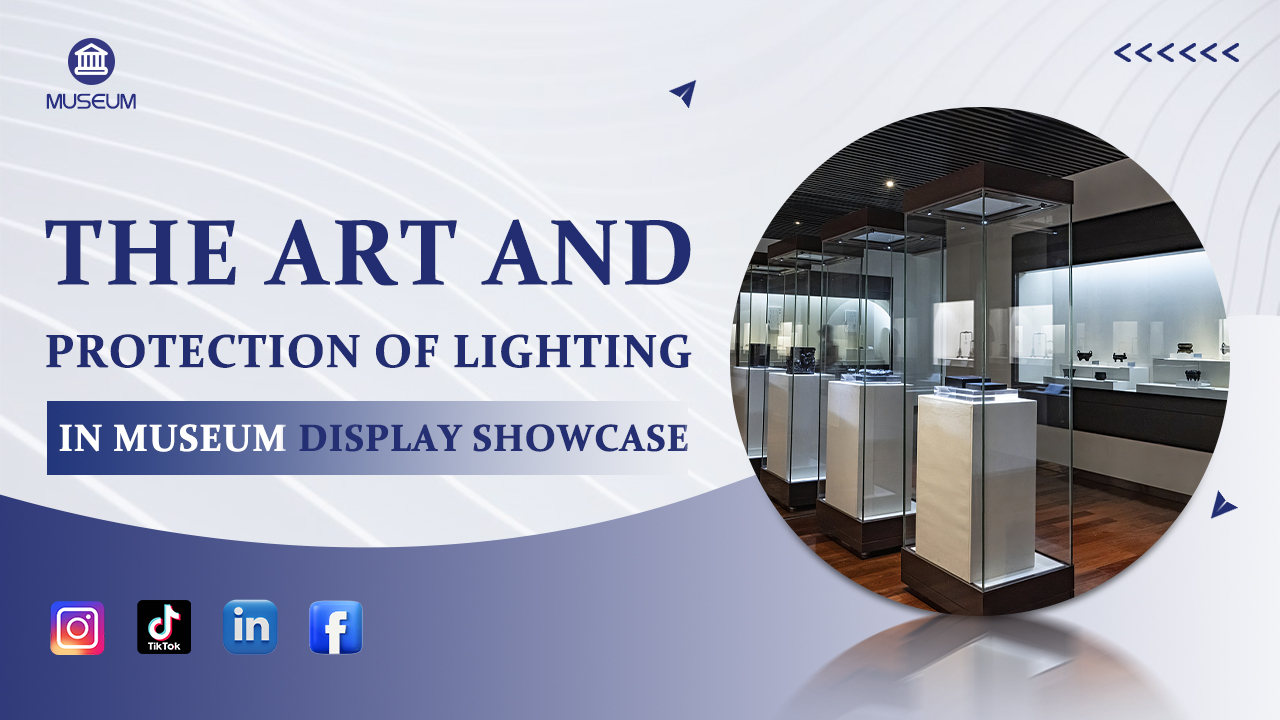
And the same time museum lighting design should be continuously followed and updated. With the development of science and technology and the continuous advancement of lighting technology, new lighting solutions may be more suitable for the needs of display showcase lighting. Therefore, DG display showcase's professional museum display showcase R&D team is always learning new knowledge and updating equipment and technology to ensure the best display effect and protection of exhibits.
Finally, I sincerely urge you to choose DG Display Showcase as your museum display showcase supplier. With over 24 years of experience, we have accumulated a wealth of expertise and know-how in the display showcase industry. We understand the importance of lighting to the display of exhibits, and we are committed to creating the best display effect for each precious artefact.
DG Display Showcase not only focuses on the precise use of lighting, but also on the protection of exhibits. Our display showcase lighting design follows strict safety standards to ensure that exhibits are protected from ultraviolet and infrared radiation, as well as to avoid over-raising the temperature of the display showcase, so that your artefacts can be protected for a long time.
Let's work together to provide the perfect display platform for the world's precious artefacts and treasures, so that the light of history and culture can never be extinguished. Choose DG Display Showcase, let us witness the brilliance and inheritance of civilisation together.
Quick links
Project
Product
China Marketing Center (Showroom):
9th Floor (Full Floor), Zhihui International Building, Taiping Town, Conghua District, Guangzhou
China Manufacturing Center:
Dinggui Industrial Park, Taiping Town, Conghua District, Guangzhou