


How Museum Display Cases Protect Cultural Relics?
To protect collections and create a safe and comfortable display space for collections, museums need custom museum display cases. Museum display cases should be custom-made because each exhibition and museum has different product groups. Some historical artifacts should be exhibited in a moisture-free environment, and some kinds of cultural relics should definitely be exhibited in sealed display cases without contact with air.
There is no risk in some products interacting with the outside environment, but they need to be illuminated separately on a display case basis so that visitors can examine them comfortably. We can multiply these examples; in short, museums should research different custom museum display case options to protect the exhibited products and present them in the most beautiful way.
Accidents and Climate Activists
Museum display cases also protect the relics from accidents or unexpected child behaviors. In August 2024, a child among the visitors of the Hecht Museum in Israel accidentally caused a 3500-year-old vase to break. Such accidents happen unexpectedly often, but with museum display cases, none of these would have happened.
In recent years, climate activists have frequently taken actions that damage works of art in museums. It has not been experienced in the past and is easily avoided. Museum display cases are the most effective protection method to prevent art and historical artifacts from falling victim to vandalism.
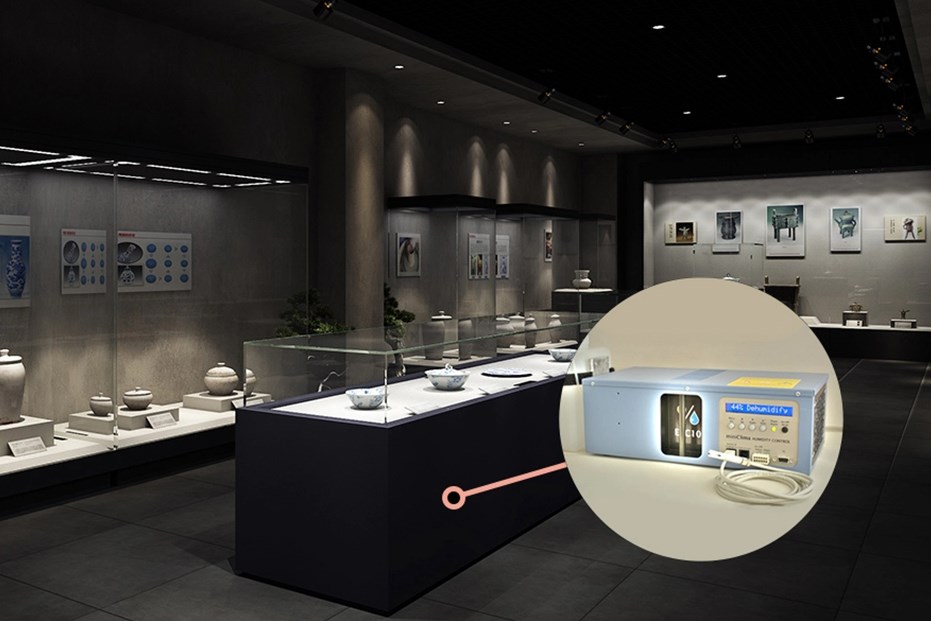
How Museum Display Cases Protect Cultural Relics?
The primary function of museum display cases is to protect cultural relics from physical and environmental damage. Security is a top concern for museums, and these cases provide several layers of protection. First and foremost, a robust locking system is vital.
The high-security Abloy locks used in custom museum display cases are hidden and can be integrated with smart alarm systems, ensuring that valuable artifacts remain safe from theft. Additionally, the use of laminated safety glass adds another layer of security. Even if the glass is broken, its structure remains intact, preventing unauthorized access.
In addition to bodily safety, sealing is another important issue. Museum show instances use excellent silicone seals to save you air pollution and pests from coming into the show-off. The silicone used is especially long-lasting, resistant to tearing, and can face up to temperatures ranging from -20℃ to +55℃.
Moreover, many custom museum showcases are equipped with advanced weather manipulation systems. These systems regulate the temperature and humidity inside the case, growing a microclimate that minimizes environmental damage to sensitive items.
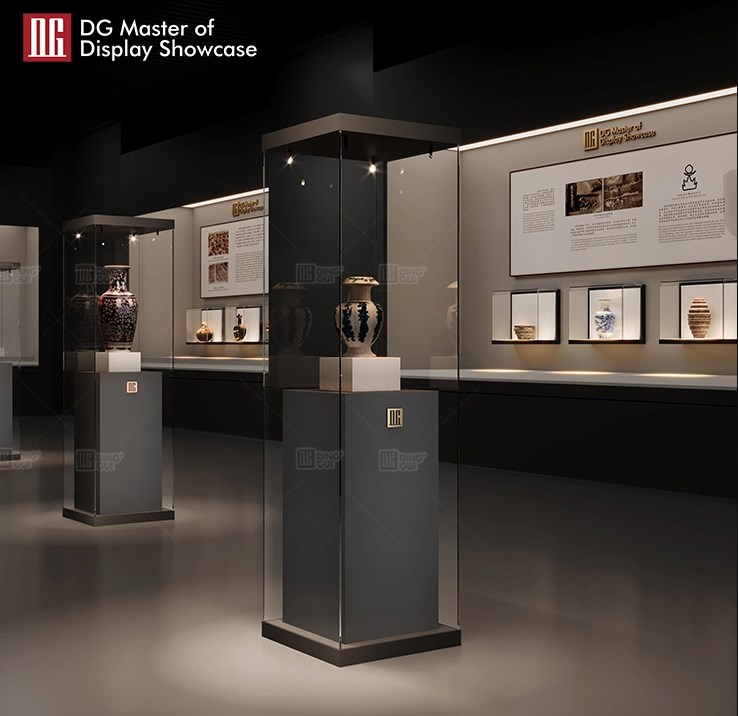
Lighting and Display for Museum Display Cases
Lighting plays a key position in the presentation of artifacts inside museum show instances. The right lighting fixtures now not only complement the visibility of the items but also guarantee that the light does not harm touchy substances. Different types of lamps are used depending on the requirements for the show-off. For example, museum focus track spotlights offer intelligent focusing and high color accuracy, making them ideal for displaying detailed objects.
Anti-glare spotlights help defend collections by minimizing mild publicity while providing a clean view. Wall washers are used for even light distribution throughout larger presentations, ensuring no harsh shadows or uneven lighting.
In custom museum display cases, lights can also be customized to meet the particular needs of a show. Whether the goal is to highlight a selected function of an artifact or to create immersive show surroundings, lighting fixture options are flexible and can be adapted to match distinctive exhibition designs. The purpose is to repair history, even making sure that the lighting enhances and protects the gadgets on show.
The display setup itself is also crucial in enhancing the visitor experience. Museums often use tailored display tables, frames, and panels to present artifacts at the right height and angle. This ensures that visitors can view the gadgets in their full glory without obstruction. Additionally, show props help create a glide in the exhibition space, guiding traffic via different sections and making the exhibit extra enticing and immersive.
Maintenance and Installation of DG Display Showcase Systems
Proper installation and preservation are important for ensuring that museum display cases remain useful and effective over the years. DG Display Showcase gives expert installation offerings that cater to the precise needs of every consumer.
Whether through detailed installation drawings, instructional videos, or on-site services, DG's installation team ensures that the cases are set up correctly and efficiently. Modular product units are assembled with precision, resulting in high-quality display equipment that meets the exact specifications of the museum. Once the custom museum display cases are installed, regular maintenance is required to keep them in optimal condition.
DG provides professional guidance on showcase system maintenance, including tips on glass cleaning and sealing system care. By following these maintenance protocols, museums can extend the lifespan of their display cases and save on repair or replacement costs.
Conclusion
In conclusion, museum display cases are essential tools in the preservation and exhibition of cultural relics. From security features like advanced locks and laminated glass to environmental controls such as climate regulation, these cases offer comprehensive protection for artifacts. Custom options ensure that each display case is tailored to the exhibit's specific needs, enhancing the collection's safety and presentation.
With DG Display Showcase's design, installation, and maintenance expertise, museums can trust that their valuable items are in good hands. For museums looking for the best in both protection and presentation, custom museum display cases from DG Display Showcase are the ideal solution.
Quick links
Project
Product
China Marketing Center (Showroom):
9th Floor (Full Floor), Zhihui International Building, Taiping Town, Conghua District, Guangzhou
China Manufacturing Center:
Dinggui Industrial Park, Taiping Town, Conghua District, Guangzhou